We build public libraries for books. Why not for tools?
The obvious answer is money. We constantly hear how the government is struggling to provide the basics such as health and education, and as anyone who listened in to the recent Budget heard: we can’t expect a lolly scramble! Money is, supposedly, in very short supply. But does it make sense that our lives can be so constrained by the digital zeroes that are literally created by the government at will? The reality is: money isn’t in short supply. Our modern monetary system is a bit like the cobwebbed basement of an old museum that no one has been into for many years. But in the last thirty years or so a group of economists has been digging into the history and mechanics of how it works – and what they have learned challenges a lot of conventionally held theory, in particular the messages that have been drilled into us over the last forty years regarding the need for government austerity.
Take as an example the early North American colonies, before the independence of the United States. These colonial governments started with limited powers, and it was difficult for them to “motivate” people to build the roads and public buildings they needed, or to serve in the army. And so, they devised a new (for them) system: they imposed taxes (e.g. land and poll taxes) on their settlers – payable in a newly created paper currency.
The settlers didn’t want that paper money– not until the government demanded it from them in taxes. To get the paper money they had to work for the government, doing whatever the government asked them to do. The system was planned and legislated in detail: the government worked out how much work it needed done in the upcoming year – if it decided it needed 100 soldiers, at a pay of $50 each a year, then it would need to demand $5000 worth of taxes, and issue $5000 worth of paper money to people willing to be soldiers. Batches of paper notes were created and dated so they could be traced to the appropriate scheme. The notes paid out represented a debt the government owed the settlers for time worked – a debt the settlers could claim by using the notes as payment for their taxes. After the notes were taxed back from the private sector they were destroyed – their purpose had been fulfilled and the debt obligation of the government to the settlers had been extinguished. The money was often burned publicly – it had fulfilled its purpose and no longer represented a debt.
It’s clear that North American colonial governments and their people understood something that we have lost sight of – that governments can organise citizens to do work for them – through the levying of a tax liability and the creation of money. It’s not that the government needed the tax revenue – the government needed the citizens to “want” to do work for them. The need to pay taxes meant that the private sector had to offer goods and services for sale in the state’s currency. Once the members of the private sector had obtained the necessary state currency, they could pay their taxes (avoiding the penalties for non-payment) and by earning state currency above the tax liability they could save.
The sequence is key; first the state levies a tax bringing forth goods and services for sale, second it provisions itself by buying the goods and services offered for sale, third the state drains excess state money with taxes to maintain the value of the currency.
Taxes are basically a less coercive mechanism of force or compulsion than guns – if the people know the government can back up tax collection with some kind of force, it is effectively the same thing. It is simply a means for the government to shift resources to itself in order to serve public purposes.
The same logic applies today, just with digital zeroes and no public burning. The belief that governments can’t spend money to fix the issues we are seeing is ideological and has been used to justify an era of public austerity. In reality our government faces no scarcity of money, just real resources. Our government is less financially constrained than it was post-World War II, for example, which is an era in which we were investing heavily in housing, health, education and other public services.
New Zealand has a government that issues its own currency, enforces tax collection in that currency, doesn’t borrow in anyone else’s currency and has a floating exchange rate (since 1985); this means we can invest as fully as is necessary to provision society. The catch is that the real resources must exist – we can’t magic things up with money. We don’t have unlimited people in society, nor do we have unlimited resources. It is true that we can’t have everything that we want, but we can direct our limited time and resources to the things we do want. Sensible planning prioritises spending (resources) on our basic needs and ensures that we have enough people trained in those areas, including teachers, doctors, nurses and other care and essential industry workers.
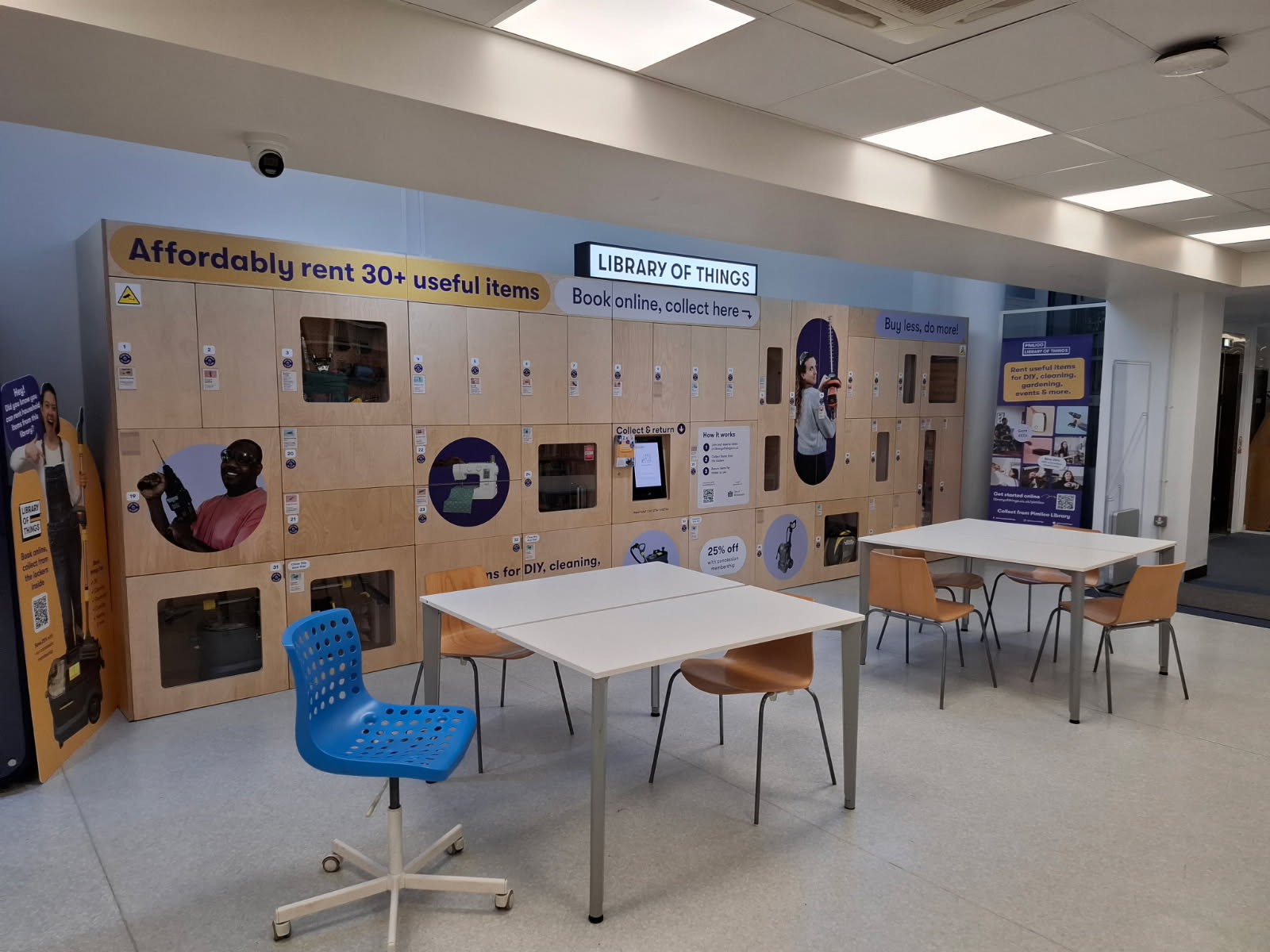
The Auckland Library of Tools (ALoT) is a community tool library that loans out tools and equipment, reducing the need for every household to own the same tools. We think this is a sensible thing for a society focussed on real resources to fund. Our purpose includes reducing unnecessary consumption and encouraging environmental sustainability through increased sharing, DIY accessibility, repair cafes, and education. The services we deliver mean that more resources are available for alternative purposes. ALoT would love to expand our services to provide self-service lockers with high quality tools, available at all local public libraries or other spaces, a model that exists in places such as London. The government could be funding initiatives like ALoT for the clear benefits they bring; the fact that this hasn’t happened is a political and ideological decision.
This understanding is what the advocates of Modern Monetary theory (MMT) have uncovered as they have dug into the basement of the monetary system. MMT isn’t an unproven theory or wishful thinking, or something we need to start doing. It’s practice, it’s how our modern monetary system works, it’s what we are doing – we’ve just lost sight of it. If you’re interested in knowing more, a great place to start is this movie length documentary, or you could check out here, here and here.
Naomi Cook is a volunteer at ALoT and an Economics Masters Student, studying at Torrens University, in partnership with Modern Money Lab (MML). Thanks to Dr Phil Armstrong of MML for his feedback for this piece.
Key reference:
The Paper money of colonial America by Farley Grubb, in The Elgar Companion to Modern Money Theory, Nersisyan & Wray, 2024.
